Introduction
Stuffed puff pastry twists and braided rolls are visually impressive yet surprisingly simple baked goods that combine buttery, flaky pastry with a savory filling. These pastries are commonly found in bakeries because of their elegant appearance and irresistible texture. The magic lies in puff pastry itself, which is made of layers of dough and butter that expand in the oven, creating a light, airy, and crisp structure.
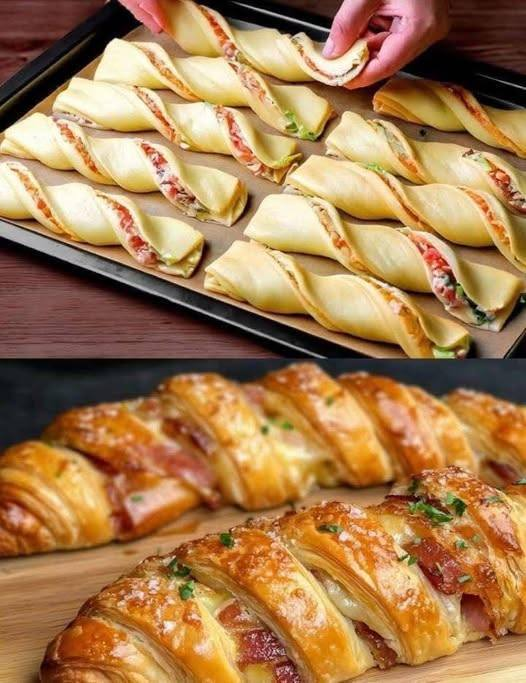
This recipe shows you how to transform basic puff pastry sheets into two attractive shapes: twisted strips and a braided roll. Both use the same filling but offer different textures and presentation styles. Twists are perfect as finger food or appetizers, while the braided roll makes a beautiful centerpiece for a table or gathering.
The key to success is handling the puff pastry correctly, keeping it cold, and baking it at the right temperature so it puffs properly and becomes golden brown.
Ingredients
For the Pastry
- 2 sheets puff pastry (thawed but still cold)
- 1 egg (for egg wash)
- 1 tablespoon milk (optional, for extra shine)
- Sesame seeds or kalonji (optional topping)
For the Filling (Savory Base)
You can customize this, but here is a classic bakery-style filling:
- 1 cup cooked shredded chicken or minced meat
- ½ cup grated cheese (mozzarella or cheddar)
- 2 tablespoons mayonnaise or cream cheese
- 1 small onion, finely chopped
- 1 teaspoon garlic, minced
- ½ teaspoon black pepper
- ½ teaspoon chili flakes (optional)
- Salt to taste
- 1 tablespoon chopped fresh herbs (parsley or coriander)
Equipment Needed
- Baking tray
- Parchment paper
- Rolling pin
- Knife or pizza cutter
- Pastry brush
Preparing the Filling
Start by preparing the filling so it has time to cool before assembling.
Heat a small pan over medium heat and sauté the chopped onion until soft and slightly translucent. Add the garlic and cook briefly until fragrant. Then add the shredded chicken or cooked minced meat and mix well.
Season with salt, pepper, and chili flakes. Remove from heat and let it cool slightly before mixing in mayonnaise or cream cheese. This step adds moisture and richness to the filling.
Finally, stir in the grated cheese and fresh herbs. The mixture should be creamy but not overly wet, as too much moisture can make the pastry soggy.
Set aside and allow it to cool completely.
Preparing the Puff Pastry
Remove the puff pastry sheets from the refrigerator and let them thaw just enough to unfold without cracking. They should still feel cold to the touch.
Lightly flour your work surface and gently roll out each sheet slightly to even out the thickness. Do not overwork the dough, as this can reduce its ability to puff.
Making Puff Pastry Twists
Step 1: Fill the Pastry
Place one sheet of puff pastry on your work surface. Spread a thin, even layer of filling over half of the sheet, leaving a small border around the edges.
Fold the other half of the pastry over the filling, pressing gently to seal.
Step 2: Cut into Strips
Using a knife or pizza cutter, cut the folded pastry into evenly sized strips, about 1 inch wide.
Step 3: Twist the Strips
Take each strip and gently twist it several times. The twisting creates a beautiful layered effect when baked and helps expose more surface area for crisping.
Place the twisted strips onto a baking tray lined with parchment paper, leaving space between each piece.
Making the Braided Roll
Step 1: Prepare the Base
Take the second sheet of puff pastry and place it on your work surface.
Spread the filling in a long strip down the center, leaving space on both sides.
Step 2: Cut Side Strips
Using a knife, cut diagonal strips along both sides of the pastry, creating flaps that will be used for braiding.
Step 3: Braid the Pastry
Fold the strips over the filling alternately from each side, creating a braided pattern. Tuck the ends underneath to seal.
Carefully transfer the braided roll onto the lined baking tray.
Egg Wash and Topping
In a small bowl, beat the egg with a tablespoon of milk. Brush this mixture over the twists and braided roll.
This step is essential for achieving a shiny, golden-brown finish.
Sprinkle sesame seeds or kalonji on top if desired.
Baking Instructions
Preheat your oven to 375°F (190°C).
Place the tray in the center of the oven and bake for 20–25 minutes, or until the pastry is puffed up and golden brown.
Avoid opening the oven too early, as this can affect how the pastry rises.
Once baked, remove from the oven and allow to cool slightly before serving.
Texture and Flavor
When done correctly, the pastry should be:
- Crisp and flaky on the outside
- Light and airy inside
- Juicy and flavorful in the center
The contrast between the crunchy exterior and the creamy filling is what makes these pastries so satisfying.
Tips for Best Results
- Keep the pastry cold at all times. Warm pastry becomes sticky and difficult to handle.
- Do not overfill. Too much filling can cause leaks and uneven baking.
- Seal edges properly to keep the filling inside.
- Use parchment paper to prevent sticking and ensure even baking.
- Bake until deeply golden for the best flavor and texture.
Variations
Vegetarian Version
Use sautéed vegetables such as mushrooms, spinach, and bell peppers with cheese.
Spicy Version
Add chopped green chilies or a spicy sauce to the filling.
Breakfast Style
Fill with scrambled eggs, cheese, and cooked sausage or turkey.
Sweet Version
Replace the savory filling with chocolate spread, fruit preserves, or sweetened cream cheese.
Storage and Reheating
Storage
Store leftovers in an airtight container in the refrigerator for up to 3 days.
Reheating
Reheat in the oven at 350°F (175°C) for 5–10 minutes to restore crispness. Avoid microwaving, as it can make the pastry soft.
Serving Suggestions
These pastries are perfect for:
- Party appetizers
- Brunch spreads
- Snack platters
- Light meals with a salad
They pair well with dipping sauces such as garlic sauce, ketchup, or a light yogurt dip.
Final Thoughts
Stuffed Puff Pastry Twists and Braided Rolls bring together simplicity and elegance. With just a few ingredients and basic techniques, you can create bakery-quality pastries at home. The versatility of the recipe allows you to experiment with different fillings and flavors, making it suitable for any occasion.